
It is late June in Montreal. The boots are finally in storage, the terrasses are full, and your sandals, espadrilles, and white leather sneakers are back in heavy rotation. Most people exhale at this point in the year — winter is the season that destroys shoes, and summer is the season that gives them a break.
We see it differently. Every July and August, the same shoes come across our bench in worse shape than the owner expected: insoles broken down from the inside, leather gone dull and stiff, suede blotched from a single afternoon storm. Winter damage is loud and obvious — you can see the white salt line. Summer damage is quiet, and by the time you notice it, the leather has often already paid the price.
Here is what a Montreal summer actually does to your footwear, why the usual at-home fixes fall short, and how we bring warm-weather shoes back to life.
”Always very friendly, fast and above all, high-end service.
Nadine PaquinCustomer
Our mission: offer quality and durable repairs
Whatever the repair is needed, our team will always make sure to make the best recommendation. We will take the time to inform and help you make a decision. Our goal? To offer a well-made result that will stand the test of time, because we know how precious your favourite shoes or boots are on a daily basis. Our services will extend the life of your favourite accessories!
Three Things Quietly Attacking Your Summer Shoes
Summer doesn’t damage shoes the way winter does. There’s no road salt and no slush. Instead, there are three separate forces working at once — and most people only think about the third one.
1. Your own sweat.
This is the big one, and it’s the one nobody talks about. A foot can produce a remarkable amount of perspiration on a hot day, and that sweat isn’t just water — it carries salts and acids. In an open sandal or an unlined sneaker worn without socks, that moisture soaks straight into the footbed and lining. Over a summer, it breaks down cork, foam, and leather insoles from the inside out, and it’s the number-one cause of the odour that makes people think a shoe is “done.” It isn’t done. It’s saturated.
2. The sun. Montreal gets intense UV in July.
Sunlight fades dyed leather and canvas the same way it fades a car dashboard or a patio cushion — slowly, unevenly, and permanently if left alone. It also bakes the natural oils out of leather, leaving it dry, pale, and prone to cracking at the flex points. A pair of navy loafers left on a windowsill or worn daily through August can lose a noticeable amount of depth in their colour by Labour Day.
3. The surprise storm.
A Montreal summer downpour arrives in ten minutes and soaks everything. Unprotected suede spots instantly. Untreated leather soles absorb water, swell, and then dry warped and brittle. Because nobody waterproofs their shoes in summer the way they (sometimes) do in winter, that warm-season rain often does more damage than the cold-season slush people actually prepare for.
Why “Just Airing Them Out” Doesn’t Fix It
The standard summer advice is to let your shoes dry out, sprinkle in some baking soda, and give them a wipe. That helps a little, but it treats the symptom, not the cause — and a few common home fixes actively make things worse:
- Baking soda and sprays mask odour; they don’t remove what’s causing it. The salts and broken-down material sitting deep in the footbed are still there. The smell comes back within a week because the source was never cleaned out.
- Leaving wet shoes in the sun to dry is one of the most common mistakes we see. Direct heat dries leather far too fast, cooking out the remaining oils and locking in any warping. Shoes should dry slowly, away from direct sun, ideally with a shaper inside.
- Scrubbing suede with a wet cloth crushes the nap and turns a spot stain into a permanent shiny patch. Suede needs to be lifted and brushed, not wiped.
- Conditioning over the top of trapped sweat-salt seals the damage in. You can’t nourish leather that still has dried perspiration sitting in its pores; you have to clean it out first.
How We Refresh a Summer Shoe
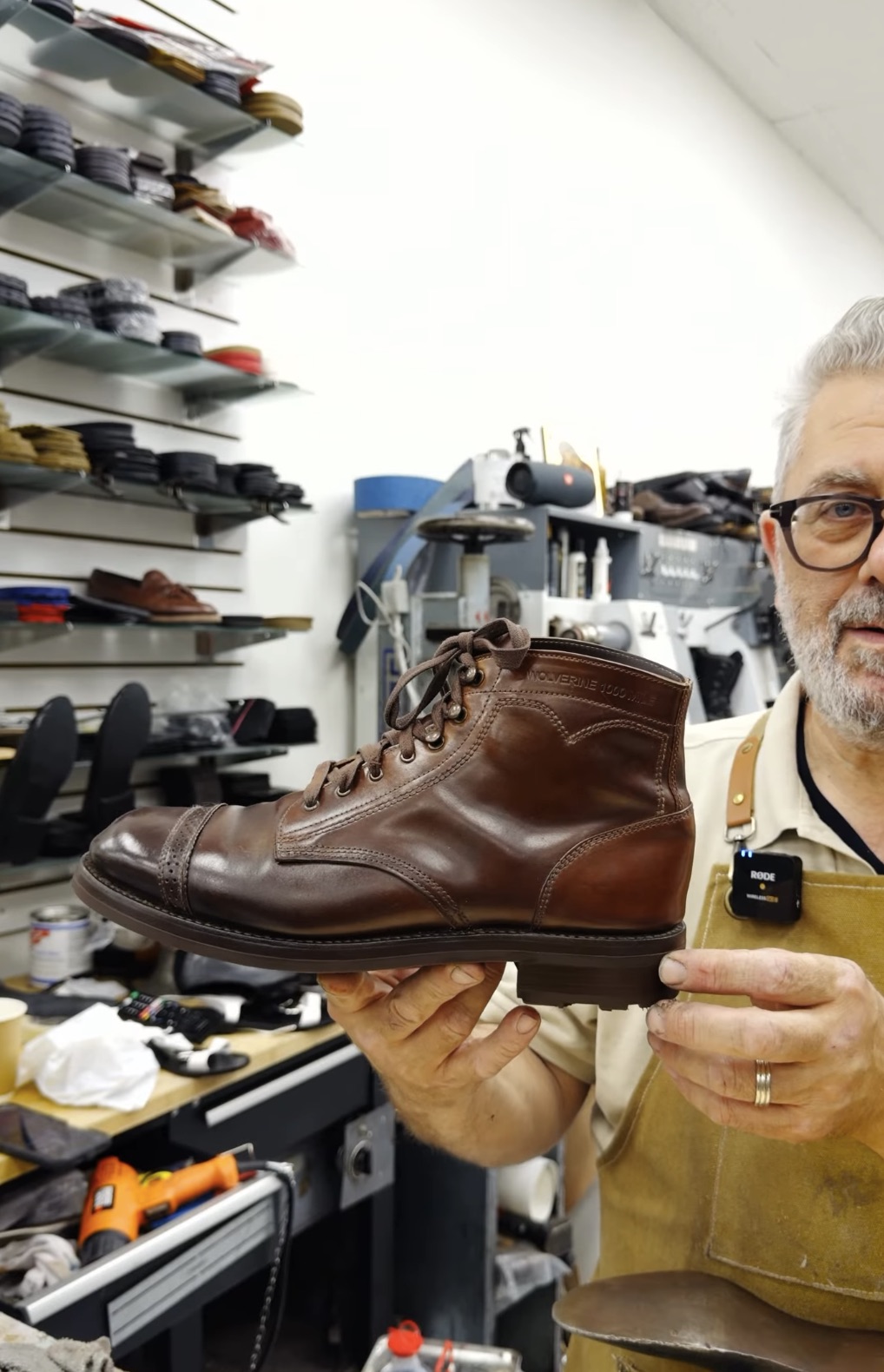
At our Mount Royal workshop, a warm-weather “refresh” is a multi-stage job, not a wipe-down. The exact steps depend on the shoe, but the sequence is consistent.
1. Deep clean and deodorize the footbed.
We flush perspiration salts and built-up residue out of the lining and insole with pH-balanced cleaners rather than masking them. This is what actually kills odour at the source and is the single most-requested summer service we do.
2. Re-pigment and revive faded leather.
Where the sun has washed out the colour, we re-pigment and feed the leather to restore its original depth and suppleness — not paint over it, but bring it back. Dry, thirsty leather gets a conditioning treatment to replace the oils the heat pulled out.
3. Restore suede and nubuck.
For sandals, espadrilles, and suede loafers, we lift the nap with brass and crepe brushes and steam, removing water spotting and returning that even, velvet texture.
4. Seal for summer, properly.
We finish with a breathable, professional-grade protector. Unlike a grocery-store can, it lets your foot’s moisture escape while blocking rain and outside water from getting in — exactly what an open or unlined summer shoe needs.
Advice for Montreal’s Most Common Summer Shoes
Birkenstocks and cork-footbed sandals. Cork is a sponge for sweat, and an unsealed footbed will dry out, crack, and crumble at the edges within a season or two. If the cork is flaking or the footbed has gone flat, it can be re-sealed and rebuilt long before the sandal is beyond saving. See our Birkenstock repair and cork restoration work.
White leather sneakers. That yellowing on the midsole and the grey creep into the leather are both treatable. We deep-clean the uppers and restore the soles rather than letting you write off an expensive pair over surface staining.
Espadrilles. The jute rope and canvas take a beating from sweat and scuffing, and the soles wear through fast on city pavement. A re-sole or rope repair early in the season buys you summers of extra wear.
Boat shoes and summer loafers. Fine, unlined leather is the most vulnerable to both sun-fade and sweat-salt. A mid-summer clean, condition, and re-pigment keeps them from going dry and patchy — and a fresh sole protects the investment underneath.
The Bigger Point: Summer Shoes Are Worth Saving Too
It’s easy to think of sandals and sneakers as disposable in a way you’d never think about a pair of Red Wings or a leather dress shoe. But a good pair of Birkenstocks, leather espadrilles, or quality white sneakers represents real money — and almost all of the summer damage we see is reversible if it’s caught before the leather cracks or the cork crumbles. Replacing a $200 sandal every two summers is a far worse deal than a clean-and-reseal that keeps it going for years.
If your warm-weather shoes are smelling off, looking faded, or feeling stiff and dry, bring them by Cordonnerie Rockland in the Rockland Centre. We’ll clean out what summer left behind, feed the leather, and seal them for the rest of the season.
Frequently Asked Questions (FAQ)
My sandals smell — is that actually fixable, or are they done?
Almost always fixable. The smell is dried perspiration salt and broken-down material sitting in the footbed. A professional deep clean flushes it out at the source, which is something baking soda and sprays can’t do.
Can you fix the yellowing on my white sneaker soles?
Yes. Yellowed midsoles and dingy uppers can be cleaned and restored. It’s one of the most common summer jobs we do, and it’s far cheaper than replacing the shoe.
Do I really need to waterproof shoes in the summer?
For suede and unlined leather, yes. Summer downpours do real damage precisely because nobody prepares for them. A breathable seal protects against sudden rain without making the shoe hot or “plastic.”
My Birkenstock cork is cracking at the edges. Is it too late?
Usually not. As long as the footbed still holds its shape, cracked or flaking cork can be sealed and rebuilt. The sooner you bring it in, the more of the original footbed we can save.
Should I leave wet shoes in the sun to dry faster?
No — this is one of the most damaging things you can do. Direct heat dries leather too fast and locks in warping. Dry shoes slowly, out of direct sun, with a shaper or crumpled paper inside.