
For the discerning individual, a pair of fine leather dress shoes—an Oxford, a Derby, or a classic Loafer—represents a commitment to quality and style. Unlike rugged work boots, these shoes are not just durable; they are elegant, defined by delicate stitching, smooth leather uppers, and, most importantly, fine leather soles.
While a leather sole offers breathability, a distinct feel, and a level of sophistication unmatched by rubber, it is also the most vulnerable component of the shoe. It wears down quickly from Montreal’s streets, is susceptible to winter moisture, and demands specialized, meticulous repair. At Cordonnerie Rockland, located conveniently to serve Montreal residents, we elevate dress shoe repair to an art form, utilizing precision tools and premium materials to ensure your high-end footwear not only functions perfectly but maintains its flawless aesthetic.
View this post on Instagram
”Always very friendly, fast and above all, high-end service.
Nadine PaquinCustomer
Our mission: offer quality and durable repairs
Whatever the repair is needed, our team will always make sure to make the best recommendation. We will take the time to inform and help you make a decision. Our goal? To offer a well-made result that will stand the test of time, because we know how precious your favourite shoes or boots are on a daily basis. Our services will extend the life of your favourite accessories!
The Vulnerability of Fine Leather Soles
A quality leather sole is beautiful, but its very nature makes it prone to rapid wear, especially against the uneven sidewalks and harsh elements of Montreal.
- Moisture & Grit: Water quickly permeates leather, leading to swelling, stiffness, and eventual rotting if not properly dried. The grit and gravel of the city act like sandpaper, wearing down the thin sole dramatically.
- The Wear Pattern: Most people wear out the toe and the heel first. The toe tapers, causing the leather to be the first point of contact, while the heel cap absorbs the majority of the impact with every step.
- Aesthetic Degradation: Unlike a rugged rubber sole, any scratch, scuff, or imperfection is immediately noticeable, demanding a higher standard of finishing and care.
Precision Resole: The Art of the Rebuild
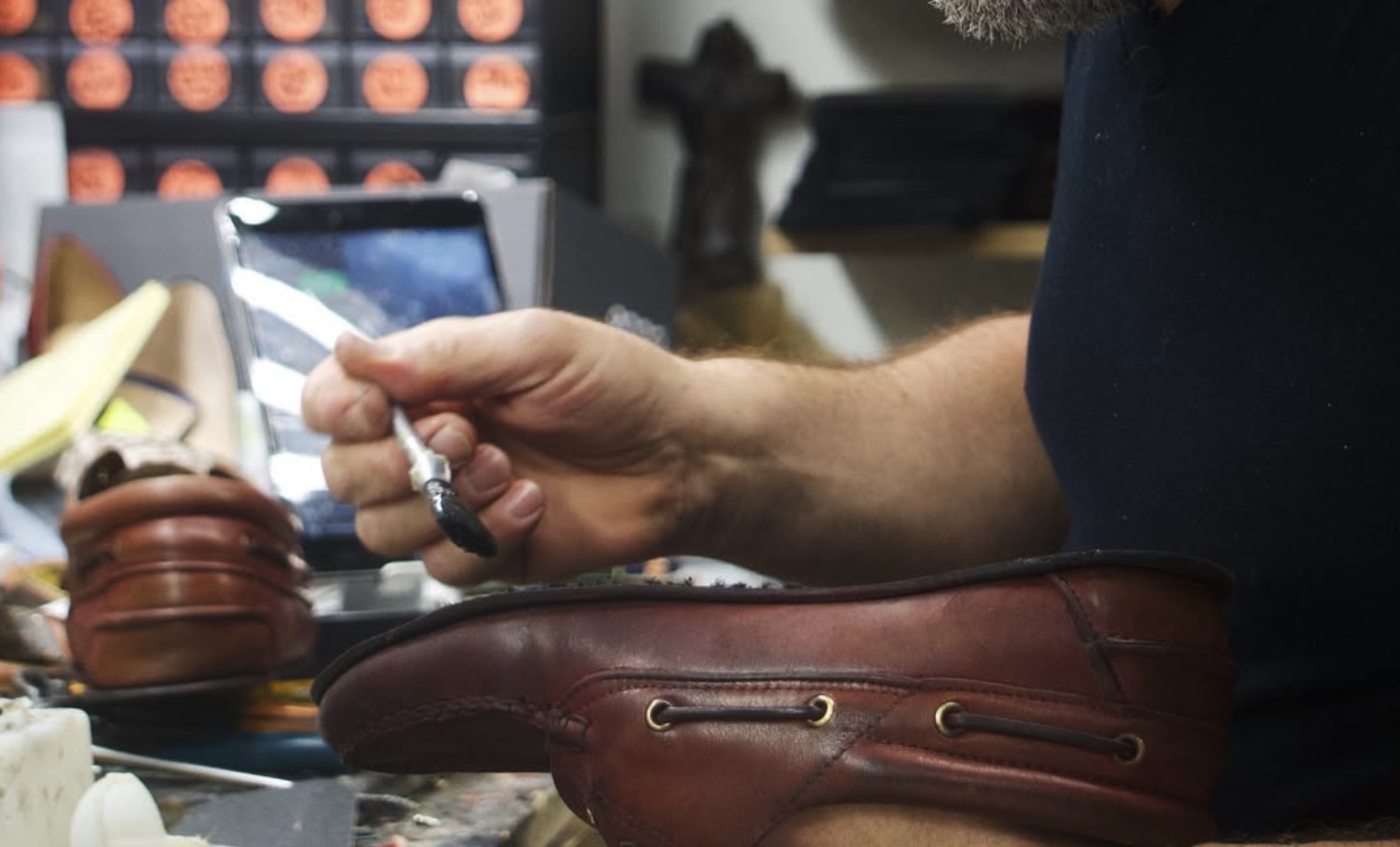
Replacing a leather sole is a precise, multi-step surgical procedure that requires the expertise of a master cobbler—not just a repair technician.
Meticulous Disassembly and Selection
The process begins with the careful removal of the worn sole, taking care not to damage the delicate welt or the shoe’s upper. We then select the replacement material—often high-grade, vegetable or oak-tanned leather imported from the best tanneries. This leather is chosen specifically for its density, flexibility, and ability to match the look and feel of your original footwear.
The Stitching and Finishing
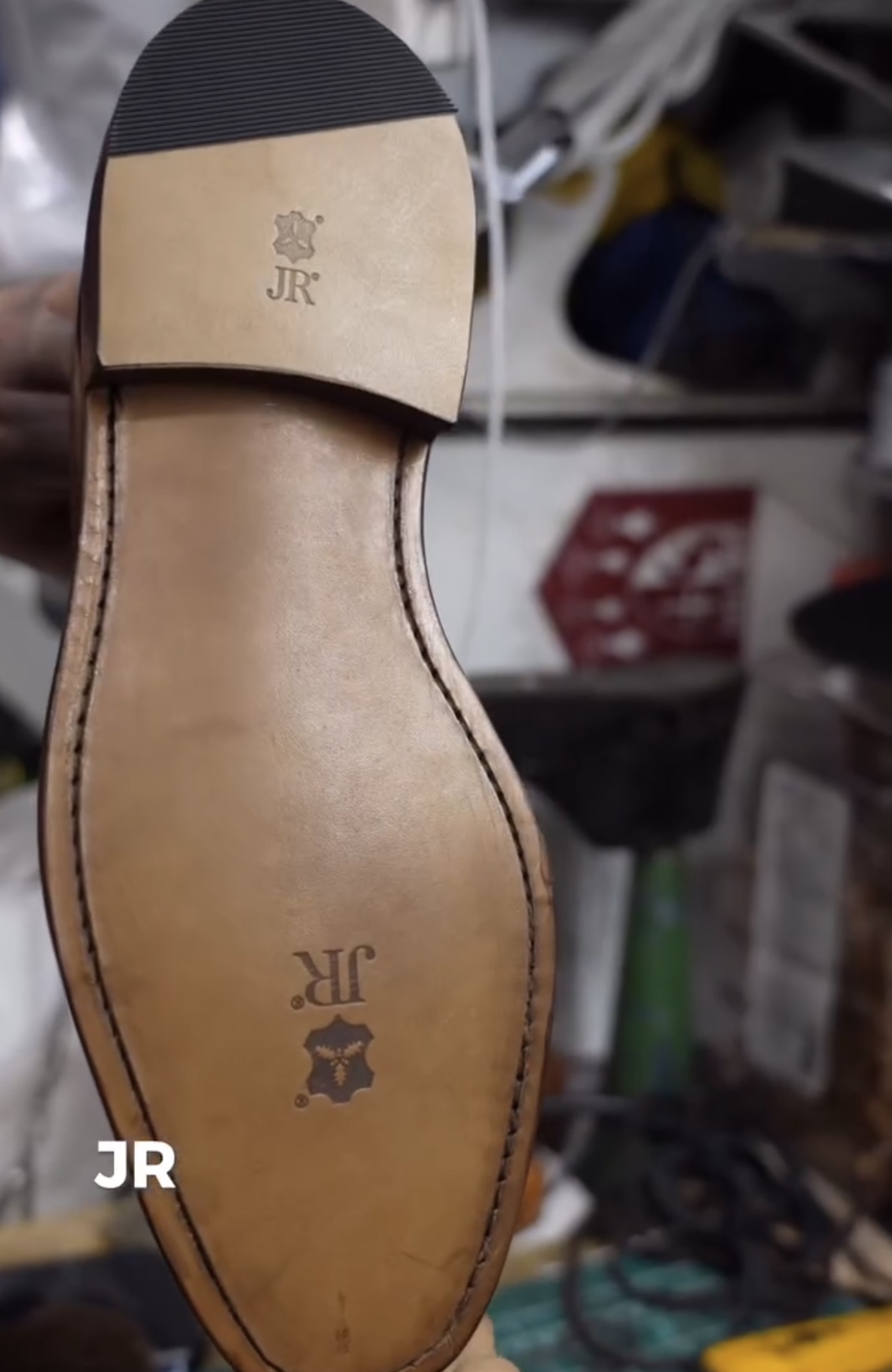
The new sole is cemented and then stitched using the original method (either Goodyear Welted or Blake Stitched). For Goodyear welted dress shoes, we employ a closed-channel stitching technique where the stitches are concealed beneath a thin flap of leather. Once the stitching is complete, the leather flap is glued down, rendering the stitches invisible from the bottom, thus preserving the elegant, flat surface desired in luxury footwear.
The final stage is meticulous sanding, precise coloring, and edge polishing. The sole’s edge is shaped, burnished, and coated to a flawless, smooth, mirror-like shine—a sign of true craftsmanship that brings the entire shoe back to life.
View this post on Instagram
Essential Preventative Measures: The Invisible Shield
To combat the inherent vulnerability of leather soles, especially against Montreal’s slush and road salt, we recommend two key preventative measures that dramatically extend the life of your repair and the shoe itself:
Thin Rubber Sole Protectors (Topy/Vibram)
For daily use, applying a thin, non-marking rubber protector (such as Topy or Vibram dress sole material) to the new leather sole is a smart investment. These protectors are only 1-2mm thick, adding minimal visual bulk while providing a powerful shield against:
- Moisture: Prevents water from penetrating the leather.
- Abrasion: Stops the sidewalk grit from tearing into the leather.
- Slippage: Adds essential traction that a slick leather sole often lacks—a major benefit on wet Montreal pavement.
Discreet Toe Taps
The front tip of the sole is almost always the first point of serious wear. If left unprotected, the leather can grind down past the welt stitching, causing structural damage. We install small, discreet metal or durable rubber toe taps (or toe plates) flush with the sole’s surface. They are virtually unnoticeable but bear the brunt of friction, preventing the costly damage caused by walking on worn-down leather.
Rebuilding the Foundation: The Heel Stack
The heel is where impact is absorbed. The heel unit is typically constructed of multiple layers of leather (the stack) capped by a protective layer of rubber or composite (the top-lift).
When the top-lift wears down to the leather stack, the layers can begin to separate, and the wearer’s posture is compromised. We meticulously replace the top-lift, ensuring a precise fit and using high-quality materials to maximize durability and restore the shoe to perfect balance and height, providing stable, long-lasting support.
Choosing professional service at Cordonnerie Rockland in Montreal for your dress shoes is not merely a repair; it is an act of preservation. We ensure that every element—from the concealed stitching to the mirror-like sole edge—is restored with the level of craftsmanship your luxury footwear deserves.
Frequently Asked Questions (FAQ) About Dress Shoe Repair
To help you better understand the possibilities and benefits of professional shoe repair, here are answers to some common questions:
Is it always better to repair a leather sole than replace it with rubber?
For aesthetic and breathability reasons, yes. However, for a daily-wear shoe in a wet climate like Montreal’s, we recommend repairing the sole with leather and immediately protecting it with a thin rubber protector (Topy/Vibram). This gives you the elegance of leather with the durability and weather resistance of rubber.
How much does installing toe taps extend the life of my soles?
Significantly. Since the toe is often the fastest-wearing part of the sole, a toe tap can delay the need for a full resole by six months to a year, making it one of the most cost-effective preventative services.
Does a full leather resole change the fit or feel of the shoe?
No. Because we respect the original construction method (Goodyear or Blake), the new sole is attached to the existing welt and insole, preserving the unique custom fit and arch support your foot has created in the shoe.
How long does a full leather resole typically take?
Due to the meticulous nature of cleaning, stitching, coloring, and final polishing, a high-quality leather resole typically requires a turnaround time of two to three weeks, depending on the current workload and the complexity of the shoe’s construction.
View this post on Instagram