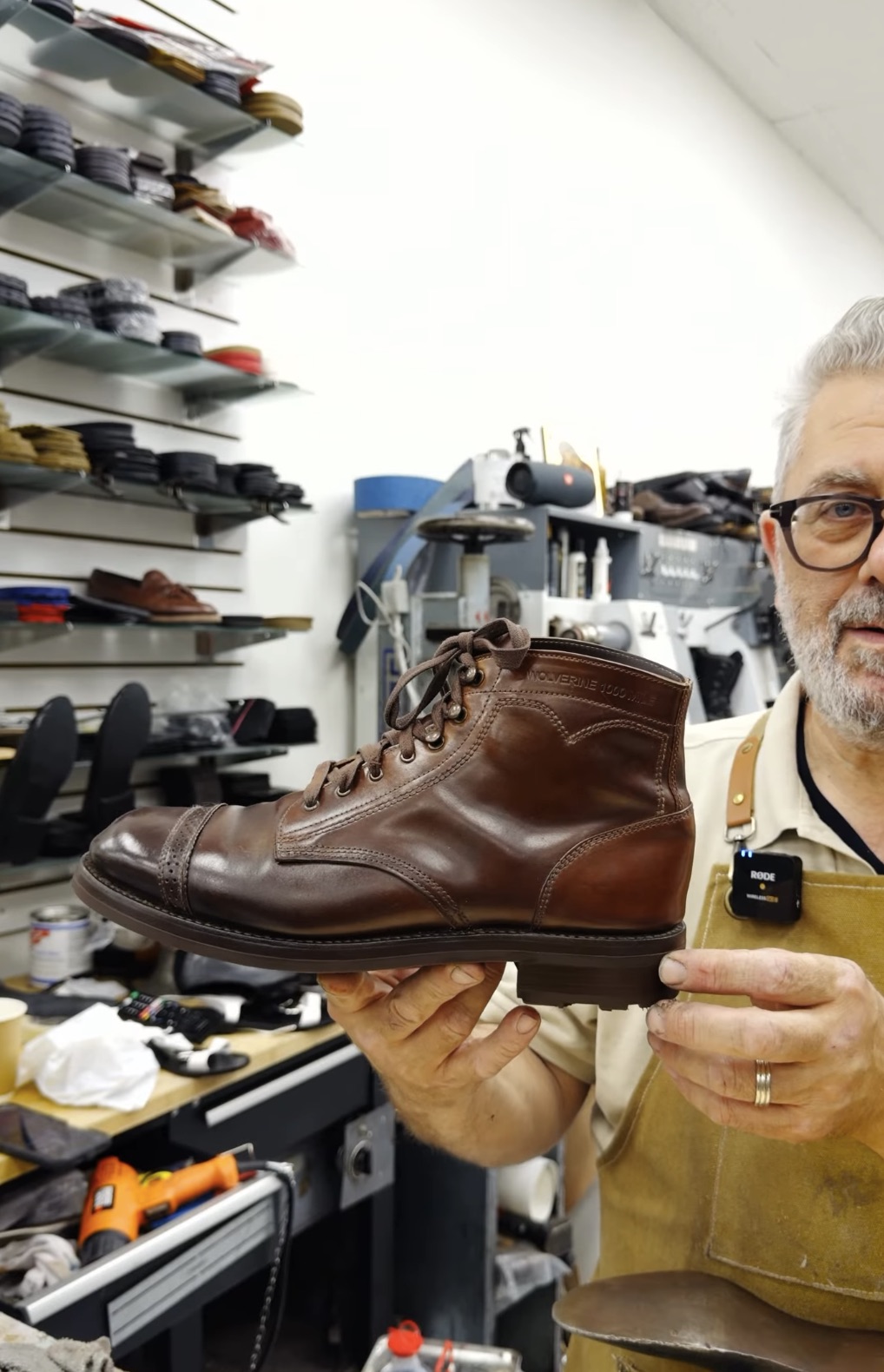
When you invest in a pair of high-quality boots or shoes—be they work boots, hiking boots, or fine dress shoes—you’re buying more than just durable leather and a good sole. You are buying an internal structure engineered for support, stability, and comfort. This is the unseen foundation—the steel shanks, cork fillers, and internal insoles that give your footwear its backbone.
Over time, these unseen components wear down. The boot may look fine on the outside, but you start experiencing foot fatigue, a floppy sensation in the arch, or general discomfort. This isn’t a sign to throw them out; it’s a sign that the internal structure needs expert maintenance. At Cordonnerie Rockland, we specialize in repairing and restoring these vital internal components, ensuring your boots not only look great but feel fantastic for years to come.
View this post on Instagram
”Always very friendly, fast and above all, high-end service.
Nadine PaquinCustomer
Our mission: offer quality and durable repairs
Whatever the repair is needed, our team will always make sure to make the best recommendation. We will take the time to inform and help you make a decision. Our goal? To offer a well-made result that will stand the test of time, because we know how precious your favourite shoes or boots are on a daily basis. Our services will extend the life of your favourite accessories!
The Core Structure: The Mighty Steel Shank
Often called the workhorse of a quality boot, the shank is arguably the single most important component for foot health and stability.
What It Is and What It Does
The shank is a rigid strip of material (typically steel, but sometimes fiberglass or wood) that is placed lengthwise between the insole and the outsole, directly underneath the arch of your foot. It is designed to be immovable. Its primary purpose is to provide torsional rigidity—it prevents the boot from bending in the middle. When walking, a shoe should only flex at the ball of the foot (where your toes meet your foot).
Without a rigid shank, the boot would bend incorrectly in the arch, leading to severe foot strain, plantar fasciitis, and overall leg fatigue. For tradesmen climbing ladders or hikers walking on rocky terrain, the shank provides essential stability and leverage.
When the Shank Fails
While incredibly durable, a shank can fail from heavy impact, extreme flexing (like repeated climbing), or rust penetration. When a shank cracks or snaps, you will likely notice:
- Sharp, localized pain in the arch of your foot.
- A “floppy” or unstable feeling in the middle of the boot.
- The feeling that the sole is bending where it shouldn’t.
The Cordonnerie Rockland Fix
Shank replacement is a precise procedure that requires deconstruction. We carefully remove the outsole and midsole, extract the damaged shank, and replace it with a new, high-grade steel shank. This work is almost always performed during a resole and is crucial for restoring the boot’s original structural integrity and safety standards.
The Custom Comfort: Cork Filler and Midsoles
The cork filler is the secret to a perfectly personalized fit in any high-quality, Goodyear welted boot.
What It Is and What It Does
In a Goodyear welted boot, there is a cavity between the insole and the midsole. This cavity is filled with granulated cork material. This cork provides a breathable layer of cushioning that, over weeks and months of wear, compresses and perfectly molds to the unique contours of your foot. This creates the coveted “custom orthopedic footbed” that makes your boots irreplaceable.
When the Cork Fails
Over years of use, the cork filler compresses fully and degrades. It loses its cushioning properties, and if exposed to moisture, it can crumble, creating voids under your foot. Symptoms of cork failure include:
- Feeling “hot spots” or pressure points.
- Feeling the texture of the shank or the ground directly.
- A general loss of the initial “spring” or cushioning.
The Cordonnerie Rockland Fix
During a resole, we thoroughly clean out the old, compressed, and degraded cork. We then pack the cavity with fresh, high-quality granulated cork. This process essentially resets the boot’s comfort cycle, giving you a new layer of shock absorption and allowing the cork to begin molding to your foot all over again.
View this post on Instagram
Restoring the Inner Layer: Insoles and Liners
The materials directly touching your foot are the final line of defense against discomfort and friction.
What It Is and What It Does
The insole (the piece of material your foot rests on) and the inner liner (the material covering the insole) are responsible for immediate cushioning, moisture management, and hygiene. On high-end boots, these are usually made of thick leather or moisture-wicking synthetic materials.
When the Liner Fails
Insoles and liners compress, absorb sweat, and eventually become a source of odor. A heavily compressed liner also offers poor hygiene and little cushioning, leading to friction and blisters.
The Cordonnerie Rockland Fix
We offer various solutions to restore this layer: from deep, professional cleaning and sanitization of the existing liner to the custom-cutting and replacement of the entire footbed liner with new, breathable leather or synthetic materials. For boots where the insole itself is removable, we can advise on and supply high-quality, supportive replacement insoles to maximize comfort and fit.
Choosing to restore the unseen foundation of your boots is the smartest investment you can make. It’s significantly cheaper than replacing a high-quality pair, and it ensures that the boots you already love will continue to provide the structural support, foot health, and comfort you depend on every day. Bring your uncomfortable boots in for a full internal health check and let us rebuild your foundation.
View this post on Instagram
Frequently Asked Questions (FAQ)
To help you better understand the possibilities and benefits of professional shoe and luxury handbag repair services, here are answers to some common questions:
Can repairing the internal components help with my foot pain?
Often, yes. Many common foot issues, such as arch pain or general fatigue, are caused by a failing steel shank or compressed cork. Restoring these components ensures your foot is properly supported in the correct position, which can alleviate significant discomfort.
Is the steel shank replaced every time I resole my boots?
No, the steel shank is very durable and usually lasts through several resoles. We only replace it if we find signs of cracking, bending, or breakage during the inspection process after the old sole is removed.
Does replacing the cork filler mean I have to "break in" my boots all over again?
You will need a minor break-in period for the new cork to mold to your foot, but it will be far less severe than breaking in a brand-new pair. The leather upper is already soft and perfectly formed to your foot, which handles the majority of the discomfort during the original break-in.
How long does a full internal component restoration typically take?
Because this work requires accessing the deepest layers of the boot, it is always done in conjunction with a full resole. The turnaround time is typically the same as a standard resole: one to two weeks, depending on our current workload.